

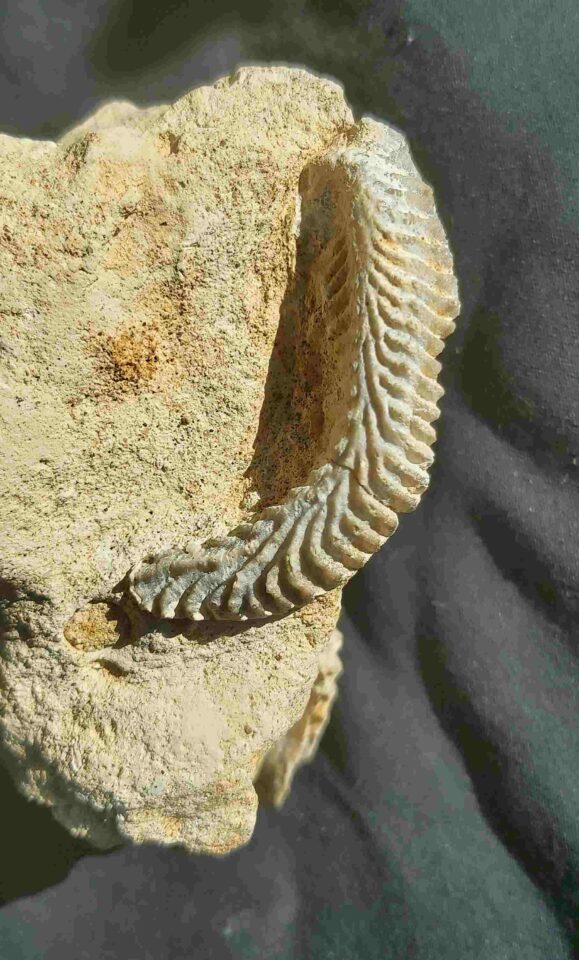
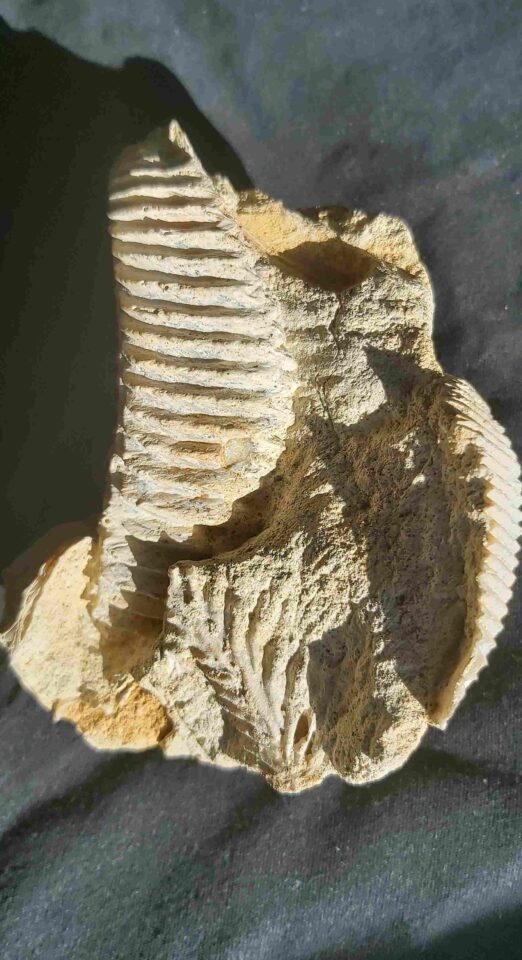
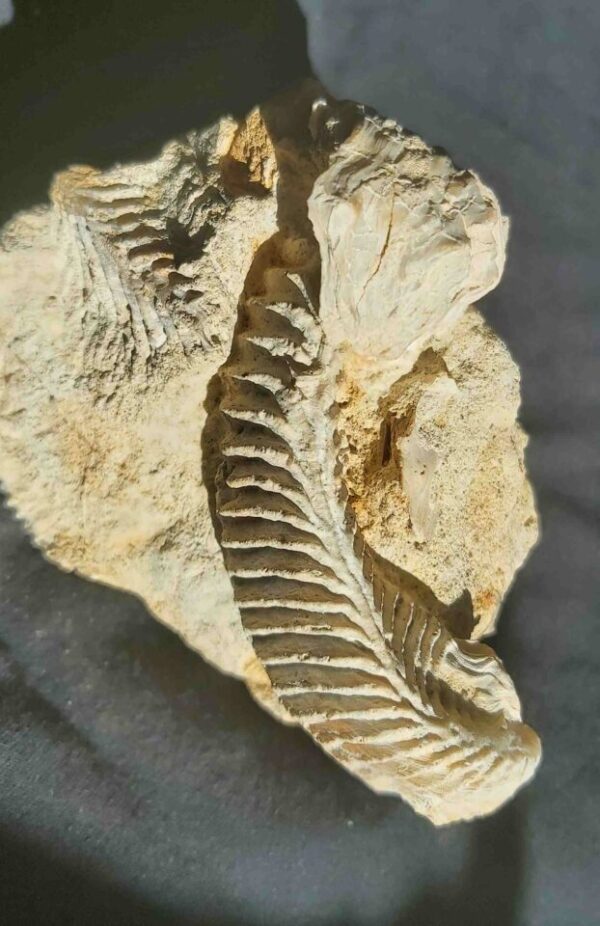


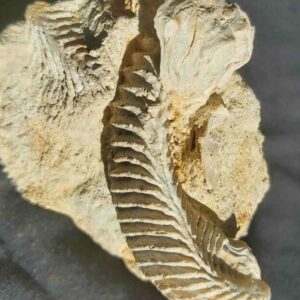
Fossil clam Ostrea carinata from Cretaceous of France
$59.00
Ostrea carinata, J.Sowerby, 1822
Phylum: Mollusca; Class: Bivalva
Order: Osteida; Family: Ostreidae
Upper Cretaceous, Upper Albian to Lower Cenoman,
Le Havre area, Seine Maritime Department, Normandy, France
- Description
- Additional information
- Reviews (0)
Description
Well preserved large fossil clam Ostrea carinata from the Cretaceous of Normandie, France. The Cretaceous rock slab features two and a half specimen of Ostrea carinata and a different species of Oyster. The largest specimen of Ostrea carinata is complete and shows all details. However it did not develop any spines. They appear with and without spines. The visible part measures 10 cm or 4 inches. The very tip is hidden under the other Oyster specimen. It also features the start up of a juvenile Worm Snail at the tip ( 1 cm). The second Ostrea carinata specimen is also well preserved, but misses a small shell fragment. It measures 2.5 inches or 6 cm. The other fossil Oyster specimen is about 3 cm or 1.1 inch in diameter. It shows fine shell faetures and some growth of Bryozoans on there.
Ostrea carinata appeares and there seems to be an ongoing debate under many different genus names. It is called Ostrea carinata, Rastellum carinatum, Lopha carinata, Arcostrea, and lately also Alectryona.
The question is the fact that most of these Oysters have no spines and only few have spines. Is it a evelutionary trend or could it be explained with sexual dimorhism. Bivalves are born males and change at a late stage into females (hermaphroditism).
Some information regarding the fossil clam can be found here: https://www.cretaceousatlas.org/species/ostrea-carinata/
For return or other policy and questions regarding taxes, go to or click here: terms and conditions.
Additional information
| Weight | 0.5 kg |
|---|---|
| Dimensions | 15.5 × 11 × 11.5 cm |




Reviews
There are no reviews yet.